 Wednesday, July 22nd, 2026
Beware of image editing with AI tools!
A recent correspondence in the scientific journal Nature warns against the spread of AI images on citizen science platforms. This has also been reported in Austrian media (https://science.orf.at/stories/3236572/). The first thing that might come to mind here are entirely AI-generated images of species used to deliberately record false observations. We do not assume such an intention amongst the users of ornitho.at. However, we would like to issue a strong warning about another, more subtle use case:
AI tools are increasingly being used in image editing and are not always clearly recognisable as such. If a photograph is ‘enhanced’ with such image-editing tools with good intentions, it can be fundamentally distorted or altered due to the nature of these generative AI methods. Here is a brief explanation of the difference compared to conventional image editing:
-
Conventional image editing: the pixels remain essentially unchanged; it is primarily brightness and colour values that are adjusted – the image is brightened, colour-saturated, sharpened, etc.
-
AI image editing: the original image is ‘interpreted’ and areas or details of the image are regenerated from scratch – a new image is created based on the original. During this step, the AI tool can theoretically make any desired change (add or remove objects, sharpen the image, remove noise or simply ‘enhance’ it), but unwanted changes may also occur or artefacts may be created.
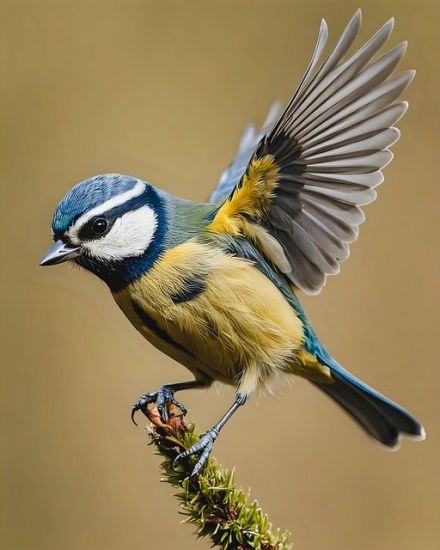
In the example cited, the supposed first record in Brazil of a North American species (Red-winged Blackbird) on the citizen science platform iNaturalist was revealed to be a photograph of a native species (Epaulet Oriole) that had been edited using AI in good faith. Whilst processing the image, the AI tool ‘invented’ plumage features that transformed the bird into the other species. The North American species will likely have featured far more frequently in the training data of the AI application used, which is why it ‘interpreted’ the bird as a Red-winged Blackbird.
The main purpose of photos on ornitho.at is to document observations. We are taking this example as an opportunity to point out that images distorted by generative AI methods are completely worthless for the purposes of ornitho.at. We therefore strongly advise against the use of such tools! On a citizen science platform such as ornitho.at, an imperfect but genuine documentary photograph is ALWAYS preferable to a ‘great’ but manipulated photograph!
We therefore ask you, when editing your photographs, to consider whether your workflow might involve AI tools and, if so, to refrain from using these programmes. Furthermore, we generally ask for restraint when editing photos – even excessive editing using ‘conventional’ methods can distort the purpose of photographic documentation.
Photo: AI-generated or edited, supposed blue tit, © Alexas_Fotos, Pixabay
posted by Benjamin Seaman

Due to major maintenance work, the ornitho.ch website will not be accessible on April 20 from 8 pm until the following morning.
This work also affects the other websites in the ornitho family as well as synchronization with NaturaList. We therefore recommend that you synchronize all recorded data with NaturaList before 8 pm on April 20, and then wait until ornitho.ch is available again before using the app.
posted by Benjamin Seaman
Wednesday, August 28th, 2024
Quail hunting – Call to report illegal playback lures
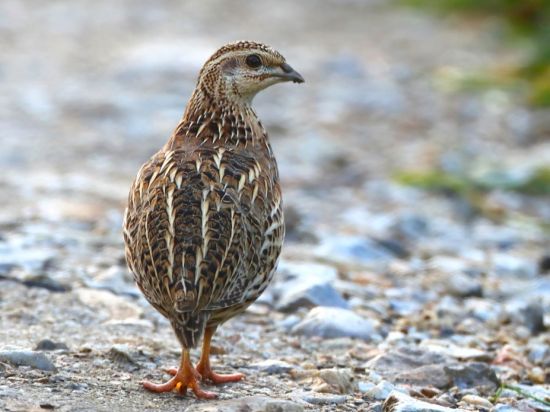
September is quail hunting season in Burgenland. The Common Quail, which is classified as “near threatened” in Europe, is also experiencing a downward trend in Austria with an estimated 2,500-5,000 calling males. Over the past two years, over 500 quails were shot in Burgenland (mainly in the three districts of Güssing, Neusiedl/See and Oberpullendorf) each year, although the hunting season only lasts one month. These (relatively high) numbers as well as several reports of (illegal!) playback lures during this period suggest that some hunters are using prohibited methods to attract the birds. We need your help to assess the extent of this illegal practice: as birds should not be calling persistently in September, we ask you to listen out for such calls and report these observations to us. This can be done via ornitho.at (please use the keyword “Klangattrappe” in the comment) or directly via our reporting channels for wildlife crime (birdcrime.at).
Many thanks for your assistance!
Photo: L. Bucher, ornitho.at
posted by Benjamin Seaman
Tuesday, September 5th, 2017
posted by Benjamin Seaman
Collaboration for the European Breeding Bird Atlas
Are you planning a visit to other European countries in the near future? Your observations can be a valuable help to fill gaps in the coverage of the new European Breeding Birds Atlas, particular in east and south-east European countries. On the EBCC website you can find guidelines on how to report your observations. For additional questions please contact Verena Keller. If you plan to record your observations using the soon to be released ornitho app (for Android-smartphones only!), please contact our Biolovision support for a pre-release version. Are you currently planning a trip for next year? The atlas coordination team under Petr Vorisek is happy to provide you with more information!
Many thanks for your support!
Verena Keller
Chair of the Atlas Steering Committee
posted by Benjamin Seaman
Thursday, March 6th, 2014
New app for ornitho.at coming soon
During the past months quite a few users were already able to test the new ornitho-app for smartphones. A lot of records have already been entered successfully. Currently, some minor problems are still being solved. The app will be officially available in a few weeks. Right now we would like to inform all potential users, that until further notice the ornitho-app will only be available for android smartphones (version 2.3 and higher). We will inform you here as soon as the app is generally available over Google Play.
posted by Benjamin Seaman
|




 Observations
 Statistics